
Linn City burned in April 1861, then the great flood nearly erased it
A Willamette River shipping town founded by Robert Moore as 'Robin's Nest' lost its mills to fire and most of the rest to the record flood of 1861, yet its name outlived it.
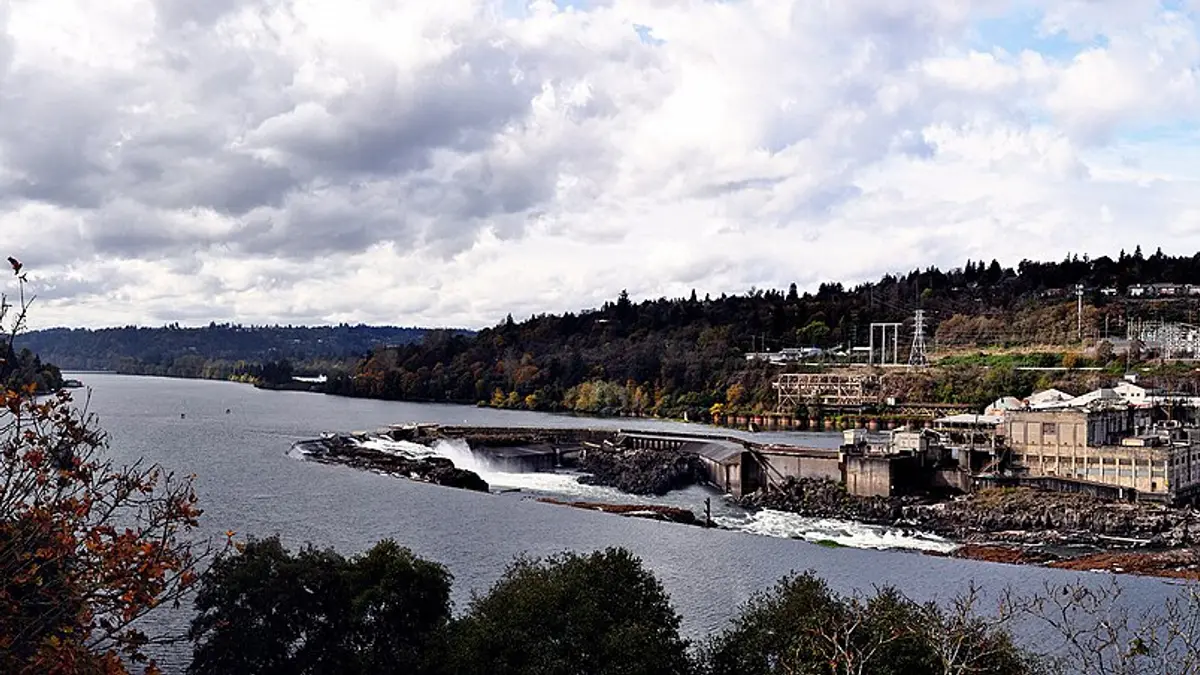
In the space of a single year, the Willamette River town of Linn City lost its mills to fire and then, by one account, was virtually wiped away by water.
The flood of 1861 is the largest on record in the Willamette Valley, and one eyewitness quoted by the Oregon Encyclopedia said that "the whole Willamette Valley was a sheet of water."
The town never entirely disappeared.
Its name came back in 1913, when the city of West Linn chose to honor it.
From Robin's Nest to Linn City
According to the City of West Linn, the settlement began in the early 1840s, when Robert Moore bought 1,000 acres from the "Wallamut" (Willamette) Indians.
He built a cabin high on a slope overlooking Willamette Falls and started a town he called "Robin's Nest."
The site is now occupied by the West Linn Paper Company.
On December 22, 1845, Moore, who sat in the provisional legislature, renamed the town Linn City, according to the West Linn Historical Society.
The name honored Sen. Lewis F. Linn of Missouri.
The city's history page calls Linn Moore's friend and a well-known free-state advocate, and credits him as sponsor of the Donation Land Claim Bill.
That date is 181 years ago this December.
The town grew quickly.
By 1846, the Historical Society says, Linn City had a tavern, a chair manufactory, a cabinet shop, a gunsmith shop and a wagon shop.
A hotel, a physician and a mercantile followed.
Moore's son, James Marshall Moore, arrived in 1847 and ran the mercantile.
The city's account adds that Moore had built four flour and lumber mills by 1846, along with housing for mill workers, and that he ran a ferry to Oregon City.
A post office opened in 1850, with Moore as first postmaster.
In 1852 he bought The Spectator, an Oregon City newspaper.
In 1852–53 he built the Linn City Works, which the Historical Society describes as a gristmill, sawmill, warehouse, wharves and a breakwater.
The breakwater created a basin where boats could load and unload.
Linn City had become, in the society's words, a major shipping point on the west bank of the Willamette.
The timing suited the region.
The Oregon Encyclopedia notes that California's gold rush created a hungry market for Willamette Valley lumber and flour, and that fifty ships arrived in the river's tidewater in 1849 to buy grain and lumber.
The 1860 census listed 225 residents in the community that became West Linn, according to the city.
Fire, then flood
Robert Moore died on September 2, 1857, and the town's luck turned within a few years.
The Historical Society says a fire broke out in the lower warehouse on April 23, 1861, and destroyed the Works.
The city's history says a fire destroyed the sawmill, gristmill, wharves and a docked steamer.
Local businessmen began rebuilding, the city says, only to see the work washed away by floods later that same year.
The sources differ on when the flood struck.
The Historical Society's page says November 1861, while the flood is often remembered as an early-December event.
The Oregon Encyclopedia confirms only that 1861 saw the largest flood on record.
By the Historical Society's account, the flood "virtually wiped away the rest of Linn city," and the town slowly rebuilt.
A town revived, a name preserved
The city says Linn City was revived in 1868, when the Willamette Transportation Locks Co. began providing passage for shipping over Willamette Falls.
The Oregon Encyclopedia dates the opening of the canal and locks at the falls to 1873, so the sources give different years for the locks.
According to the city, the locks ran continuously until the Army Corps of Engineers put them in "non operational" status in 2011.
In 1913, the city says, West Linn was incorporated, bringing together West Oregon City, Bolton, Sunset and Willamette Heights.
Incorporation let those communities get services and improvements without annexing to Oregon City.
After what the city calls considerable debate over a name, the founders chose to honor the pioneer town Moore had built.
The floods that ruined Linn City eventually gave way to engineering.
The Oregon Encyclopedia reports that the Army Corps of Engineers built a system of Willamette Valley dams, the last completed in 1969.
The encyclopedia says those dams ended the most destructive flooding along the valley's floodplain.
The sources mention no marker or surviving building from Moore's town.
What remains is the name and the site on the river.
The city's population has gone from 225 in the 1860 census to 27,568 today, according to the city.
This story was written with AI assistance from the public sources listed above. Spot an error? Email [email protected].